We will achieve this through our values in the following way:
We will be award winning and forward thinking
We will take account of people’s needs and treat them fairly
We will ensure FREDIE is at the heart of all our decision-making, every day, by everyone
We will listen and respond to people’s needs and talk about what we do
At Beyond Housing we aspire to be an active leader in our communities, understanding who our customers and service users are, and able to quickly adapt to demographic changes and trends. We aim to be an industry leader, recognised as an organisation that is committed to FREDIE by our colleagues, customers, and stakeholders. We aim to maintain our Investors in Diversity status with the National Centre for Diversity (NCD), with a stretch target to be recognised as a Leader in Diversity, or a similar level accreditation, by the end of 2030. We were reassessed again in October 2025 and maintained our Investors in Diversity silver status, and a ranking in the top 100 most inclusive employers listing.
In November 2024 we started to switch our language about equalities issues from equality, diversity and inclusion (EDI) to fairness, respect, equality, diversity, inclusion and engagement (FREDIE) in line with the NCD framework. We did this because we truly believe that fairness and respect are the underpinning principles for EDI and should be front and centre in our framework and our colleagues thinking. The roll out is still a work in progress with some of our paperwork/statements still referring to EDI; these will be updated during normal document update cycles.
This report is an ‘at a glance’ summary of our achievements and actions in 2025 and main aims for 2026, set out in line with the recommendations of the Yorkshire and Humberside EDI baseline survey report for the Yorkshire and Humberside Chief Executives Forum 2021.
- Set ambitious and measurable targets
-
We have committed to addressing pay gaps and producing a wider equalities pay gap report expanding our statutory duty to report on gender pay gaps, and publishing this on our website. Our equalities pay gap report covers disability, sexual orientation, ethnicity and religion as well as gender.
We measure equality/inclusivity with our colleagues during our annual colleague survey every April/May. Colleagues are asked the following questions in relation to overall organisational fit:
- Organisational fit: Beyond Housing’s values are personally relevant to me
- Equality: Colleagues from all backgrounds are treated fairly at Beyond Housing
- Response: If I reported serious misconduct at work, I’m confident Beyond Housing would take action to rectify the situation.
On two of these measures, Beyond Housing performs above the benchmark and has improved since the previous year. Organisational fit relates to values, and our values programme was on pause during 2025 awaiting a refresh towards the end of the year:
April/May 2025 Beyond Housing True Benchmark¹ Comparison to benchmark Movement from previous year Organisational fit 80% 82% -2% -2% Equality 87% 81% +6% +2% Response 81% 78% +3% +1% (Scores are an agreement rating with a maximum score of 10)
We aim to maintain or improve upon our ratings each year.
1 The true benchmark accounts for factors that could skew the results such as location, tenure, age, etc providing a more accurate way of comparing Beyond Housing performance against other organisations.
- Adopt policies and practices to deliver on FREDIE
-
We engaged with the National Centre for Diversity (NCD) to undertake external auditing to independently assess our performance in FREDIE and shared the results with colleagues. We gained Investors in Diversity award in October 2021 and retained the accreditation after reassessment in October 2023 and 2025. We remain ranked within their top 100 most inclusive employers list, currently at 74.
We are Disability Confident Committed and in 2025 we were recognised by the Armed Forces Covenant Employers Recognition Scheme at gold level, having previously been accredited at silver. We are also signed up to the CIH’s Make a Stand pledge to tackle domestic violence and have developed a standalone policy on domestic violence.
We take positive action in recruitment, offering job interview guarantees to applicants with disabilities, armed forces veterans, and currently serving reservists under our Disability Confident Committed and Armed Forces Recognition Scheme Gold statuses. We also share all of our vacancy adverts with Clean Slate Solutions, who support the rehabilitation of offenders into employment.
We remove personal details from applications in our recruitment portal to reduce the risk of unconscious bias, even though our recruiting panels are fully trained, and we monitor recruitment data at each stage of the application/appointment process.
Equality impact assessments are carried out on all our policies and procedures, to ensure we are mindful of the impact of any changes may have on different customer or colleague groups.
We mandate essential training for all colleagues on FREDIE covering respect in the workplace, professional boundaries and also training on mental health awareness. We also make additional FREDIE training available through our ‘Beyond Learning’ portal for eLearning.
The benefits of this eLearning are:
- Enhancing workplace culture: Respect in the workplace is fundamental to creating a positive environment where everyone feels valued and safe. We aim to ensure a fair organisational culture and promote mutual respect among colleagues by ensuring all colleagues complete this training
- Consistency across the organisation: Making the training mandatory ensures that every colleague receives the same foundation of knowledge and understanding of respect-related issues. This consistency is crucial for aligning our values and expectations across all teams
- Addressing workplace challenges: In a diverse world, it is essential that we equip our colleagues with the tools and knowledge to navigate interpersonal dynamics effectively. The eLearning module provides valuable insights into recognising, preventing, and addressing any forms of disrespect or discrimination that may arise between colleagues, and between colleagues and customers
- Legal and ethical obligations: As an organisation, we have a responsibility to comply with legal and ethical standards regarding colleague behaviour. The training reinforces our commitment to upholding these standards and ensuring a safe and respectful environment for everyone
- Continuous improvement: By delivering and reviewing this training, we are taking proactive steps to improve our environment continuously. It provides an opportunity for colleague self-reflection and personal growth.
We have an active FREDIE champions forum, where colleagues who are enthusiastic about FREDIE come together to research, promote and champion FREDIE as well as reviewing equality impact assessments. They run regular FREDIE based campaigns for colleagues to maintain awareness across the company, linking in with national campaigns and religious festivals where appropriate.
These groups are supported by a HR Advisor who acts as FREDIE Co-ordinator, supporting these groups, researching good practice, promoting FREDIE and the ally schemes, reviewing website content, and ensuring we progress our action plan to make further improvements to inclusivity. They are supported by a HR Business Partner who takes responsibility for steering the action plan and reporting progress to senior colleagues.
We’ve enabled ReachDeck, Everway’s web accessibility and language toolbar on our website to make it more accessible. This tool helps people with common conditions such as sight loss and dyslexia to access our website in the way that suits them best. It allows users to customise how the website looks in terms of background colours, font sizes and font colours, as well as read website text aloud. It also meets the needs of the one in ten people in the UK who don’t speak English as their first language, with the ability to translate our web content into over 100 different languages.
We have an established FREDIE ally scheme, involving a four-step programme where people can advocate for each other to build a more positive work culture, helping people be aware of the potential for unconscious bias, discriminatory language, micro-aggressions etc. in the workplace, we currently have 113 allies across the business. As part of our move to make FREDIE part of everyday life we will be reviewing whether we wish to continue with this scheme, or expand this expectation to all colleagues.
We have an established FREDIE statement of principles and an established policy, and we have consulted with customers about these at each stage of revision or refresh.
We provide WhistleB, an anonymous whistleblowing tool that enables colleagues to report inappropriate behaviour if they feel they cannot raise it another way. No allegations of inappropriate behaviour by colleagues were received through this channel during 2025.
We have established grievance and bullying/harassment (or dignity at work) procedures. During 2025, five allegations were raised through these procedures related to bullying or harassment, all were fully investigated but none were upheld.
By the end of the year, following further training, we had 17 trained Mental Health First Aiders, and we engaged in several health campaigns and initiatives, led by our team of Health Advocates. This led to the achievement of Better Health at Work Award at continuing excellence level (this is above gold level) in December 2023, which we retained in 2024 and 2025.
- Work to improve the quality and use of data
-
We collect data about our customers at tenancy sign up, and on colleagues and the board when they start employment or tenure. When we started on our equalities and inclusion journey we knew there were gaps in our data; the categories we collected against had data missing, there was data we did not yet collect, such as gender transition or carer responsibilities, and there were disparities in the data collected from each group (customers/colleagues). This issue of data incompleteness mirrored the trend across the sector (as found in the NHF EDI surveys 2021 and 2023). We continued to work on this during 2025 reducing the gaps in our data, however this remains a work in progress.
We have begun to update, and verify customers’ information when they contact us and use this to ensure that our housing management and customer relationship management (CRM) systems record and flag the information we need. This helps us to understand how we may tailor our service offer or where reasonable adjustments should be made. We also use this information to understand where customers may be more at risk and need further direct or indirect support. The next steps are to use this data to consider the current and future profile of our customer base and to use this to better inform our decisions and policy/procedures.
- Commit to engaging with the rest of the sector to share best practice and learning
-
Members of our FREDIE Champions Forum and FREDIE Steering Group have attended network meetings, training sessions and forums to learn from others about what works and what doesn’t.
We have engaged with sector surveys and reports on FREDIE such as the National Housing Federation EDI data tool.
- Collaborate with organisations across the region and nationally to use combined resources and influence improved outcomes for under-represented groups
-
We are members of the Housing Diversity Network and we work with Clean Slate Solutions to promote the rehabilitation of offenders, and the First Light Trust to support veterans locally.
We continue to collaborate with a number of organisations in our regions through sponsorship to bring awareness to FREDIE topics, supporting us to build trust in Beyond Housing as a landlord and employer amongst under-represented groups. This includes the sponsorship of Redcar and Cleveland’s Inspiring Women Awards each year, which celebrates the achievements of women in the borough, helping to raise the profile of women and their contributions to society.
Our Community Fund helped support a number of smaller organisations, including EVA Women’s Aid, where funding enabled the redecoration of their counselling space, and the Senses Wellbeing Centre, which delivered additional SEND sensory sessions for families across Redcar & Cleveland and the wider region.


Our actions in 2025
- Introduction
-
We committed to many actions in 2025 as part of our ongoing plan to deliver our ambitious aspirations for FREDIE. Here is a summary of our progress:
- 1. Training for colleagues and managers ✔
-
a. Complete the delivery of sexual harassment prevention training to all managers in January 2025 and launch an essential e-learning module for all colleagues, to deliver against the enhanced responsibility of employers to prevent sexual harassment from October 2024.
This was completed.
b. Arrange awareness raising sessions for colleagues on being Dementia Friends.
We focussed on delivering this training initially to colleagues in our Reach & Respond service as these colleagues are probably most likely to provide services to customers with this potential vulnerability. The training sessions were designed to build their awareness and understanding of dementia, helping them to provide even better support to our customers with vulnerabilities.
c. Review essential training for FREDIE and ensure colleagues are encouraged to refresh training as required.
We rolled out ‘respect in the workplace’ training as a replacement for our previous equality and diversity elearning for all colleagues to keep the materials fresh for colleagues renewing their training requirements.
d. Continue with the roll out of neurodiversity training for managers.
This was put on pause during 2025.
e. Roll out further team support sessions to support teams with neurodiverse team members as required.
We provided support and coaching for specific teams leading to wellness action plans and provision of support by autism plus via access to work.
- 2. Continue to collect and refresh data held about customers and colleagues ✔
-
Continue to collect and refresh data held about customers and colleagues, and use this along with data about our recruitment processes and data from colleague exit interviews to direct our attentions to where they are needed most, to support our aspiration to create an environment where all colleagues feel valued and included, and all customers believe we understand and meet their individual needs.
We have continued to push out ‘who are you’ comms to colleagues and the data gap has continued to improve. We are looking at how we can collect and store caring responsibilities and whether colleagues are social housing residents in our new HR system to further expand our data.
We have begun to update, and verify customers’ information when they contact us.
- 3. Continue with our regular campaigns ✔
-
Continue with our regular campaigns to colleagues to ensure reminders about WhistleB, zero tolerance, policies and procedures, ally scheme, meet your champions, and how to have conversations about appropriate and inappropriate behaviour.
This was delivered.
- 4. Reassessment against the Investors in Diversity standard ✔
-
Reassessment against the Investors in Diversity standard, due October 2025.
We successfully retained the Investors in Diversity award at silver level, and were ranked at number 74 in the National Centre for Diversity top 100 most inclusive employers listing 2025.
- 5. Complete the transition from referring to EDI to FREDIE ✔
-
Complete the transition from referring to EDI to FREDIE, ensuring all our training and documents reflect this change.
This was delivered but continues to be a work in progress as we update our documentations within our planned cycle of review.
- 6. Refresh and relaunch our ally scheme and champions membership ✔
-
Refresh and relaunch our ally scheme and champions membership, encouraging more colleagues to voluntarily take up both roles, embedding our inclusive culture in everything we do.
We recruited further allies.
- 7. Pilot and refine a mutual mentoring scheme ✔
-
Pilot and refine a mutual mentoring scheme, this will involve senior managers partnering with apprentices to both share their career journey and experience to support the apprentices development, and to learn from and understand the apprentice experience and perspective.
This was delivered.
- 8. Look at how we can best support customers with disabilities ✗
-
Following feedback from customers on our action plan, look at how we can best support customers with disabilities, for example when visiting their homes to carry out a repair, and raising awareness of staff on this.
This action was carried forward to 2026.
Case study – reasonable adjustments in recruitment 2025
Read about how we have made adjustments in our recruitment process.
Feedback from customers
- Customer insight
-
During 2025 we also started to gather insight from our customers on their perception of our performance under FREDIE. The majority of customer feedback strongly highlights the importance of respect and courteous treatment by colleagues, both in person and over the phone.
Customers consistently praised operatives and office colleagues who are polite, friendly and considerate, noting that being listened to and treated as valued individuals makes a significant positive impact.
- Net Sentiment & Rating Distribution
-
Overall Net Sentiment Score – 38 136 comments from 134 replies
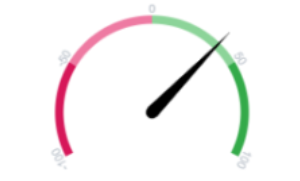
NSS = Positives (65%) – Negatives (28%)
Rating Distribution 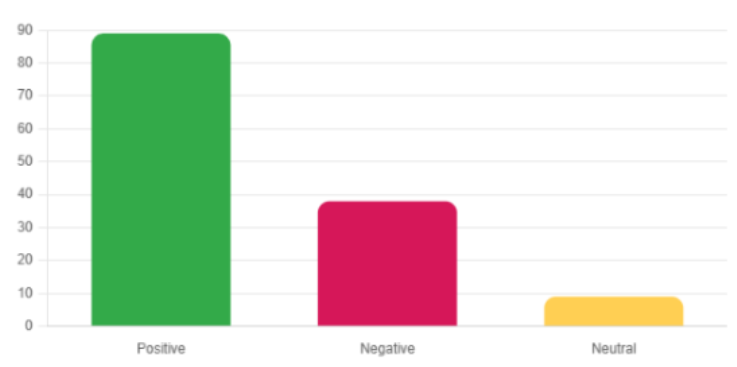
Negative 28%
38 comments
Neutral 7%
9 comments
Positive 65%
89 comments
- Exploring negative sentiment
-
Negative customer sentiment suggests we should explore colleague training on respectful and empathetic customer service, particularly for service centre and frontline colleagues when dealing with complex or ongoing repair issues.
Our actions for 2026
- 1. Look at how we can best support customers with disabilities
-
Following feedback from customers on our 2025 action plan, we will look at how we can best support customers with disabilities, for example when visiting their homes to carry out a repair, and raising awareness of staff on this.
- 2. Reset and refresh our training on FREDIE issues
-
Reset and refresh our training on FREDIE issues, including:
- Exploring colleague training on respectful and empathetic customer service, particularly for service centre and frontline colleagues when dealing with complex or ongoing repair issues. Customer feedback suggests this may help increase customer satisfaction. We will explore whether this is a training issue or a quality assurance and performance management issue
- Dementia awareness
- Neurodiversity training and support.
- 3. Improve, verify and use data to understand the current and future profile of our customer base
-
Improve, verify and use data to understand the current and future profile of our customer base to inform decision making and evidence in our policies/procedures.
- 4. Contact colleagues who have not declared their protected characteristics
-
Contact the small proportion of our colleagues who have not declared their protected characteristics or have said they ‘prefer not to say’ to explain why we gather the data, how we will store and how we will use it, to encourage them to declare.
- 5. Continue with regular colleague campaigns
-
Continue with our regular campaigns to colleagues to ensure reminders about WhistleB, zero tolerance, policies and procedures, ally scheme, meet your champions, and how to have conversations about appropriate and inappropriate behaviour.
- 6. Consider the future of the champions and ally scheme
-
Consider the future of the champions and ally scheme, and whether we can further develop our approach to truly embedding FREDIE with all colleagues.
- 7. Review and refine the mutual mentoring scheme
-
Review and refine the mutual mentoring scheme before launching this with a second cohort of apprentices.
- 8. Review the feedback from the Investors In Diversity reassessment
-
Review the feedback from the Investors In Diversity reassessment (scheduled for February 2026), and create and deliver an action plan to continue our journey towards being an even more inclusive organisation for all colleagues and customers.
Our data
- Gender
-
Gender
Percentage
Colleagues
Customers
Board and commitee members
2024
2025
2024
2025
2024
2025
Female 45.03% 44.88% 62.11% 62.19% 58.33% 50.00% Male 54.73% 55.00% 37.82% 37.81% 41.67% 50.00% Non-Binary 0.00% 0.00% 0.07% 0.00% 0.00% 0.00% Transgender 0.12% 0.00% 0.00% 0.07% 0.00% 0.00% Unknown 0.12% 0.12% 0.00% 0.00% 0.00% 0.00% - Ethnic origin
-
Ethnic Origin
Percentage
Colleagues
Customers
Board and commitee members
2024
2025
2024
2025
2024
2025
White British 94.49% 94.05% 74.73% 71.88% 100.00% 100.00% BME 1.20% 4.40% 2.85% 2.24% 0.00% 0.00% Prefer not to say 0.24% 0.24% 0.00% 0.56% 0.00% 0.00% Unknown 4.07% 0.83% 22.42% 25.33% 0.00% 0.00% - Religion
-
Religion
Percentage
Colleagues
Customers
Board and commitee members
2024
2025
2024
2025
2024
2025
Other 2.04% 2.14% 1.01% 0.96% 0.00% 0.00% Buddhist 0.12% 0.12% 0.08% 0.09% 0.00% 0.00% Christian (all denominations) 37.37% 35.95% 19.71% 18.59% 41.67% 50.00% Hindu 0.00% 0.00% 0.01% 0.01% 0.00% 0.00% Jewish 0.12% 0.12% 0.01% 0.01% 0.00% 0.00% Muslim 0.24% 0.24% 0.25% 0.25% 0.00% 0.00% No religion 43.83% 45.83% 20.68% 20.06% 41.67% 50.00% Prefer not to say 1.44% 1.31% 3.67% 3.51% 0.00% 0.00% Sikh 0.36% 0.00% 0.01% 0.01% 0.00% 0.00% Unknown 14.49% 14.17% 54.57% 56.50% 16.67% 0.00% - Disability
-
Disability
Percentage
Colleagues
Customers
Board and commitee members
2024
2025
2024
2025
2024
2025
Yes 4.31% 1.43% 27.60% 27.02% 0.00% 0.00% Not declared 95.69% 98.57% 72.40% 72.98% 100.00% 100.00% - Sexual orientation
-
Sexual orientation
Percentage
Colleagues
Customers
Board and commitee members
2024
2025
2024
2025
2024
2025
Bisexual 1.32% 1.43% 0.13% 0.12% 0.00% 0.00% Gay/lesbian 2.16% 2.26% 0.26% 0.24% 8.33% 8.33% Heterosexual 85.27% 85.11% 37.87% 36.12% 83.33% 83.33% Other 0.12% 0.00% 0.21% 0.19% 0.00% 8.33% Prefer not to say 2.16% 2.26% 4.02% 3.67% 0.00% 0.00% Unknown 8.98% 8.81% 57.52% 59.56% 8.33% 0.00% - Age band
-
Age band
Percentage
Colleagues
Customers
Board and commitee members
2024
2025
2024
2025
2024
2025
16-24 8.88% 9.64% 2.40% 2.23% 0.00% 0.00% 25-34 18.37% 18.45% 11.67% 11.16% 8.33% 0.00% 35-44 24.37% 24.17% 17.58% 17.82% 8.33% 16.67% 45-54 22.93% 24.05% 16.17% 16.21% 16.67% 25.00% 55-64 21.97% 20.24% 20.24% 20.55% 50.00% 50.00% 65-74 3.36% 3.33% 16.91% 16.95% 16.67% 8.33% 75+ 0.12% 0.00% 15.02% 15.08% 0.00% 0.00% - Data notes:
-
Data is at December.
CEO is included only in board data.